How Long Do Peptides Last After Reconstitution Finest Choices 3 Months To 5 Years
Peptide Storage Overview: For How Long Do Peptides Last?
Some sources mention 2 to 3 weeks as a practical maximum for room temperature level storage, while others suggest up to a year for especially secure sequences. Do not tremble it, invert it repetitively, or vortex it. Mechanical shear forces and air-liquid user interfaces developed by trembling can interfere with the peptide's three-dimensional structure, damaging task.with the date of prep work. Discard reconstituted peptides that exceed ideal storage space windows despite staying quantity. Even properly refrigerated peptides can weaken gradually or from dealing with errors. Recognizing destruction signs prevents utilizing compromised item and losing time on ineffective protocols. Routine evaluation needs to become part of your peptide management routine. Each elimination from the refrigerator exposes the vial to temperature level adjustment and possible contamination. Organize storage space to permit fast access without moving multiple vials. Selank and anxiety-focused peptides keep basic refrigerated stability. KPV for intestine health and wellness Regenerative Medicine applications in a similar way requires proper cold store. Semaglutide takes pleasure in improved security from its architectural modifications.
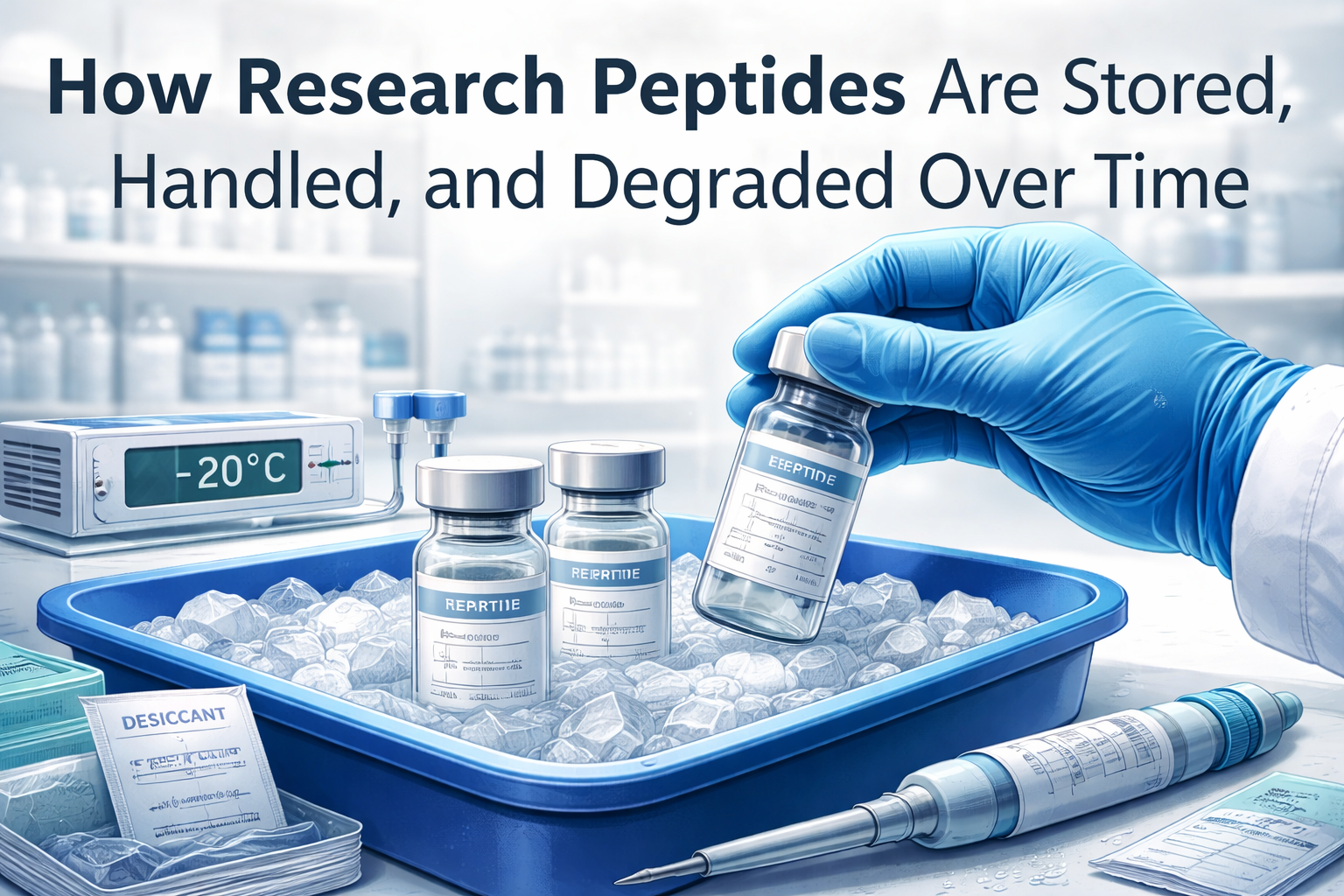
Asparagine, particularly when complied with by glycine in the sequence (Asn-Gly), is a "location" for deamidation. Glutamine at the N-terminus can cyclize to form pyroglutamic acid. Each of these susceptabilities translates straight right into shorter service life for peptides that contain these residues. Borosilicate glass vials are the gold requirement for peptide storage. Glass is chemically inert, meaning it does not respond with the peptide remedy. And critically, peptides do not bind to glass surfaces the way they bind to plastic.Exactly How To Reconstitute Peptides: Complete Uk Research Laboratory Overview (
- The efficiency of tirzepatide in assisting in weight decrease among non-diabetic individuals is a vital location of research study.
- It is long enough to prevent the trouble of exchanging vials daily or 2.
- The amino acid series identifies susceptability to certain degradation paths, meaning some peptides need even more mindful storage space than others.
- However, frequent fridge gain access to might subject peptides to a lot more light than anticipated.
- Semaglutide takes pleasure in enhanced stability from its architectural modifications.
Exactly how you reconstitute influences how long your peptide lasts in solution. Allow the lyophilized vial and your bacteriostatic water get to space temperature prior to mixing. Cold-to-cold blending can cause insufficient dissolution. Gradually include the water along the inside wall surface of the vial, permitting it to gently roll down onto Visit this website the powder. Do not squirt it directly onto the cake of lyophilized peptide.
Common Refrigeration Errors
The vial your peptide beings in matters more than the majority of scientists understand. Container product, closure kind, and light exposure all influence degradation prices. A flawlessly temperature-controlled peptide in the incorrect container will certainly still weaken faster than needed. There is also study into Biotech Peptides being a "new risk-free, reliable medicine" that can encourage individuals interested in health and fitness, anti-aging, and general health looking for. The potential for weight management through peptide therapy is especially noteworthy, with some medical tests showing significant outcomes. As an example, details peptide therapies are being checked out for fat loss, far better sleep, faster recovery, and enhanced energy levels.
In a real-world setting, a research study including 115 adults with excessive weight however without diabetics issues treated with tirzepatide revealed a mean weight reduction of 12.9% at 6 months. Saving reconstituted peptides at area temperature level is usually not recommended for any type of considerable period because of increased deterioration. UV and visible light can degrade peptide bonds in time through photodegradation. Store your reconstituted vial in its original box or an opaque container.